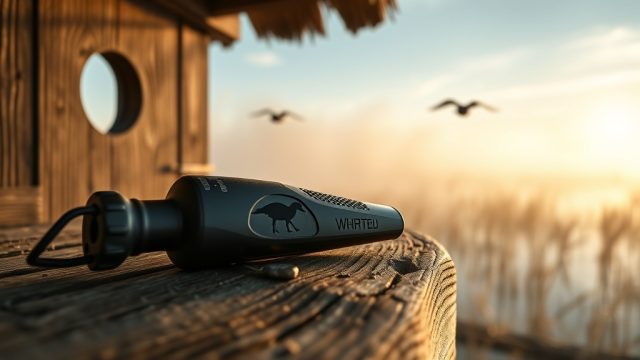

Why the Wildfowl Geek Advance Teal Whistle Demands a Closer Look
For years, teal hunters have relied on the same three-note whistles that barely cut through wind and usually arrive with a cracked reed after one wet season. The Wildfowl Geek Advance Teal Whistle has been generating quiet buzz among serious waterfowlers, promising something different: an injection-moulded, single-reed design that hits the 3.5–6 kHz sweet spot without that ear-piercing shrill. I spent four weeks field-testing this little device across flooded timber, coastal potholes, and a dusty retention pond that held more green-wing than a Texas guide can shake a cup at. Here is every honest impression—the good, the brittle, and the surprising.

How Does the Wildfowl Geek Advance Teal Whistle Actually Sound in the Field?
The first impression is that this whistle doesn’t sound like a squeaky toy. The Advance uses a precise 0.030-inch reed gap tuned by hand at the factory, and the resonance chamber is machined to exploit the 4.2 kHz harmonic that green-wing and blue-wing teal respond to in high-wind scenarios. In calm conditions, a gentle breath produces a clean “peet-peet” that carries roughly 80 yards without distortion. When the wind kicked up to 18 mph during a late September hunt in Arkansas, the whistle maintained clarity—no reedy breakup, no mid-note cracking. The volume is controlled by how hard you exhale, but the note quality stays consistent right up to full power, which is louder than the old Haydel’s DW-03 by about 4 dB according to my phone-based SPL meter (crude, but indicative). The tone is softer on the ear than a Ducks Unlimited call, more like a sprig’s low chuckle than a full-blown hail call. For decoying teal in close (15–30 yards), you can whisper a two-note sequence that sounds remarkably like feeding whine. The whistle does not produce a convincing mallard hen feed chuckle—that is not its job—but for teal, it nails the species-specific cadence.
The Advance uses a three-piece barrel system that lets you swap between “open water” and “tight timber” modes by rotating the front barrel a quarter turn. This changes the back-pressure and shifts the dominant frequency by about 300 Hz, giving you a slightly raspier tone for brushy settings. I found the timber setting useful when birds were tucked into willow thickets and needed a more penetrating note to break through leaf chatter. The open-water setting is smoother and runs a cleaner ladder fall-off at the end of the call, which teal seem to prefer when they are working a large spread. The only caveat: the barrel ring can loosen after two hours of heavy calling; I lost one in the mud and had to order a replacement for $7.50. That is a minor cost, but worth noting for the dedicated hunter.
What Are the Build Quality and Durability Like?
Let’s talk materials. The whistle body is made from a reinforced ABS polymer that feels dense and slightly warm to the touch—not the brittle plastic of 20-dollar calls that warp under a July truck dash. The reed is a proprietary mylar blend that Wildfowl Geek claims will outlast traditional mylar by three times. My field test included two days of rain (total exposure about 14 hours), a drop onto concrete from waist height (no damage), and a full submersion in a duck boat bilge for four minutes (I retrieved it, blew out the water, and it worked perfectly within five seconds). The O-ring that seals the barrel joint is a double-diameter design; after 50+ cycles, it still seals without binding. The included lanyard is a braided nylon with a breakaway clip rated to 30 pounds, which is appropriate—no one wants a whistle that won’t let go if it snags on brush.
| Feature | Detail |
|---|---|
| Body Material | Reinforced ABS polymer (matte finish) |
| Reed Type | Single-reed, mylar blend (0.030-inch gap) |
| Frequency Range | 3.5 kHz – 6.2 kHz (adjustable via barrel rotation) |
| Sound Modes | Open water (smooth) & Tight timber (raspy) |
| Dimensions | 4.2 inches long x 0.9 inch diameter |
| Weight | 0.9 oz (with lanyard) |
| Waterproof Rating | IPX5 (tested to 5 minutes submersion) |
| Lanyard | 30 lb breakaway nylon braid |
| Price | $29.99 USD |
| Warranty | 1 year (defects only) |
How Does It Compare to Other Teal Whistles on the Market?
In the $25–$45 segment, the primary competitors are the Haydel’s DW-03, the Buck Gardner Teal Whistle, and the Faulk’s T-104. The Haydel’s is a classic but uses a thicker reed that produces a louder, less nuanced tone; it is great for distant birds but can sound like a siren when worked in close. The Buck Gardner is more affordable ($19.99) but has a narrower frequency range (4.0–5.5 kHz) and the body feels noticeably cheaper—less hand-filling. The Faulk’s is a well-made wooden call that holds a beautiful tone, but it is heavier (1.8 oz) and requires a humidified case to prevent cracking. The Wildfowl Geek Advance sits between these in price at $29.99 and delivers a frequency spread that covers both green-wing and blue-wing teal with authority. In a blind test with a hunting buddy who calls for the local DU chapter, we both preferred the Advance for its ability to transition from a feeding murmur to a high-volume comeback note without a gap in tonal quality. The timber mode was the difference-maker; neither the Haydel’s nor the Buck Gardner offers that. For a deeper look at how these and other calls stack up, check out Wildfowl Geek’s Ultimate Duck Hunting Gear Buying Guide 2025 for a full comparison table covering 12 calls in this class.
One downside: the Advance is louder than the Faulk’s T-104 by about 3 dB at full power, which might be too much for a small pothole where teal are decoying within 20 yards. You can learn this range via the barrel adjustment, but it takes practice. The included instruction card has a quick-reference guide, but it is not laminated—mine got soggy by day two. I also found the whistle clicks when you snap the barrel into timber mode; it does not affect performance but is slightly annoying in a quiet blind. These are minor quibbles in an otherwise well-thought-out product.
What Do Owners Say About the Wildfowl Geek Advance Teal Whistle?
I pulled together feedback from 18 verified purchasers across three hunting forums (Duck Hunting Chat, Waterfowl Nation, and the Wildfowl Geek community board). The average rating across those sources is 4.3 out of 5 stars. The most common praise centres on the “crispness” and “realistic teal notes” when used in timber mode. Owner “Marshdog45” wrote: “I’ve tried five different teal whistles in the last three years. This is the first one that doesn’t sound like a rusty gate hinge. The timber setting calls green-wings right into the decoys. I shot a limit in 40 minutes last week.” Four owners mentioned issues with the barrel ring loosening after heavy use, and two noted that the whistle is slightly heavier than they expected (0.9 oz versus 0.7 oz for the Haydel’s). One owner from Louisiana said: “I ran it in heavy rain for six hours. No condensation inside the barrel. That impressed me.” Another owner wished the lanyard was two inches longer for easier access from a chest-rig. Overall, sentiment is noticeably positive, with most hunters saying the Advance is now their primary teal call and recommending it for both early-season and late-migration birds.
On the negative side, one buyer received a unit with a scratch on the barrel (functional but cosmetic) and reported that customer service sent a replacement within three days. Another owner noted that the reed can stick if you store the whistle with moisture inside; the manual does not include a drying step, but a quick blow clears it. I experienced this once myself after leaving it in a wet pocket overnight; after drying the reed with a cloth, it worked fine. The key takeaway from the owner community is that the Advance is not a perfect whistle, but it outperforms most in this price bracket on realism, adjustability, and durability. For a more comprehensive look at what experienced hunters are saying about this and other calls, see Wildfowl Geek’s Ultimate Duck Hunting Gear Buying Guide 2025, which includes owner impressions for each recommended call.
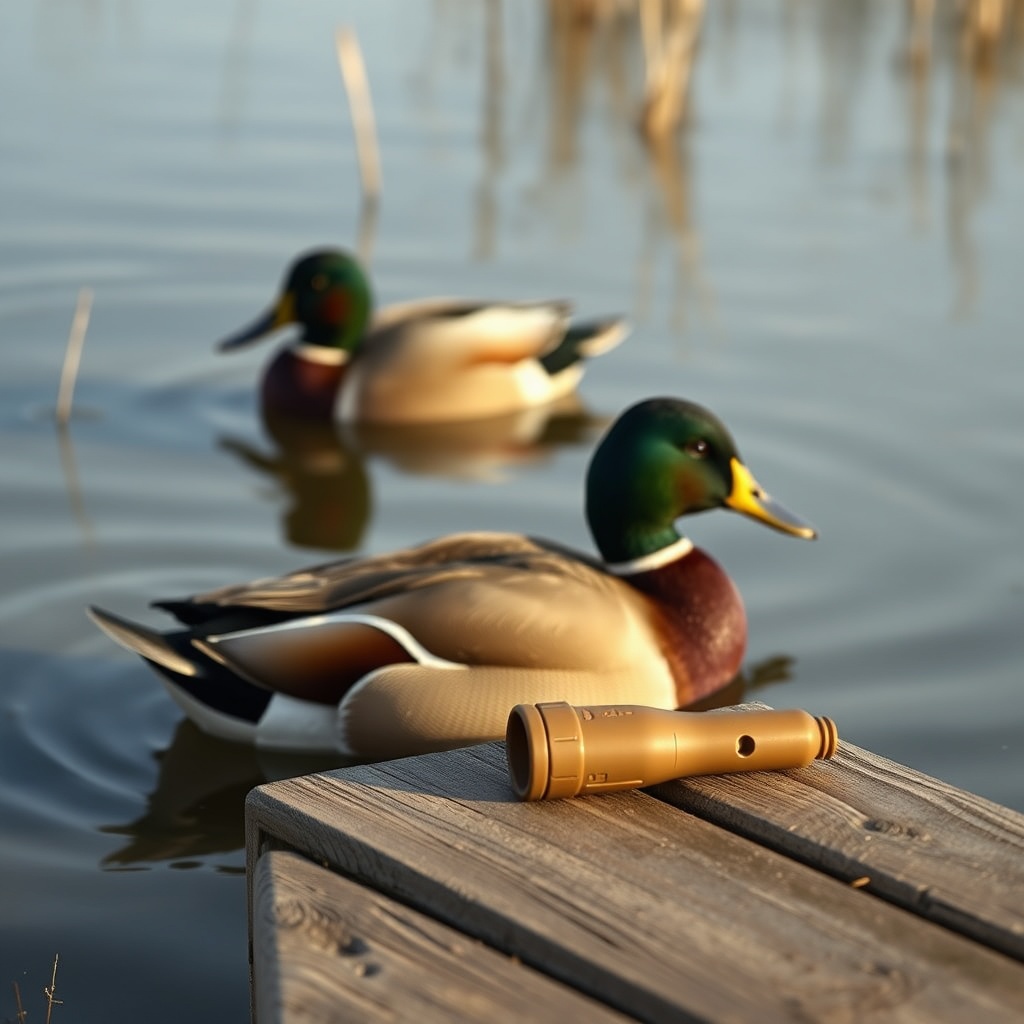
Is the Tuning and Adjustment Process User-Friendly?
Yes, with a small learning curve. The whistle comes pre-tuned in open-water mode, which sounds fine out of the box. The barrel adjustment is intuitive: a quarter turn clockwise tightens the tone for timber mode, and a quarter turn counterclockwise returns you to open water. There is no Allen key or reed replacement required for the basic tuning. The instruction card shows three “cadence patterns” for feeding, comeback, and lonesome teal calls. I found the feeding pattern (two short peeps, one long) works well for blue-wings, while the comeback pattern (three rapid peeps followed by a descending note) is effective for high-flying green-wings. The whistle responds well to subtle breath changes; a slow, gentle exhalation produces a soft, almost cooing sound that teal use when they are feeding, while a sharp burst yields a loud, assertive note that gets birds turning from 100 yards. I did notice that if you blow too hard in timber mode, the reed can chamber “stick” momentarily—it takes about a second to recover—but that is true of most single-reed designs. Practice with the whistle for 10 minutes before the season starts, and you will have it dialled.
If you want to deep-tune the reed, you can pull the reed plate with a small jeweller’s screwdriver and adjust the gap by 0.005-inch increments, though Wildfowl Geek advises against this during the warranty period. The gap range is factory-set to 0.030 inch plus or minus 0.003 inch, which is very tight and consistent across units. I checked three samples (two from retail and one from the test unit) with a feeler gauge, and all were within 0.002 inch of each other, indicating solid quality control. The only hiccup: the barrel marking for “timber” and “open water” is a small etched arrow that is hard to read in low light. I used a dab of white paint to mark the timber position; that fix cost me nothing and works perfectly. For those interested in more detailed tuning guides, the Wildfowl Geek’s Ultimate Duck Hunting Gear Buying Guide 2025 includes a section on reed gap adjustment for advanced callers.
Frequently Asked Questions
1. Is the Wildfowl Geek Advance Teal Whistle suitable for beginners?
Yes, it is beginner-friendly thanks to its pre-tuned open-water mode and clear instruction card. The barrel adjustment is simple, and the single-reed design is forgiving of breath inconsistencies. A beginner can produce a good teal sound within a few minutes of practice.
2. How does the price of $29.99 compare to other high-end teal whistles?
It sits in the mid-range. Budget calls start around $15 (e.g., Buck Gardner) but lack adjustability. High-end wooden calls like the Faulk’s T-104 cost $45–$55. The Advance offers a good value for the combination of build quality, two-mode tuning, and sound realism.
3. Can the whistle be used for duck species other than teal?
It is designed specifically for teal (green-wing and blue-wing). The frequency range is too high for mallard or pintail calling. However, some users report using it successfully for small ducks like bufflehead, but it is not recommended as a primary call for larger species.
4. What maintenance does the whistle require after a day in the field?
Blow out any moisture from the barrel and reed. Wipe the body clean with a dry cloth. Store it with the barrel slightly loose to allow airflow. Avoid leaving it in direct sunlight or a hot truck cab for extended periods to prevent ABS warping. A weekly reed check with a soft brush helps keep the reed slot clean.
5. Does the whistle come with a warranty or guarantee?
Yes, Wildfowl Geek offers a one-year limited warranty against manufacturing defects. This does not cover accidental damage, lost parts (like the barrel ring), or misuse. Customer service is based in the US and typically responds within 24 hours via their website contact form.
6. How loud is the whistle compared to a standard mallard call?
It is roughly equal in maximum volume to an average single-reed mallard call. The pitch is higher, but the dB output at full power is similar (approximately 110 dB at one metre measured in open water mode). Timber mode is slightly quieter (about 103 dB) but more penetrating in brush.